
Advertising today is less about putting up a message and more about keeping it relevant once it’s live. People move quickly, see multiple ads in a day, and tend to ignore anything that doesn’t change or catch their attention again.
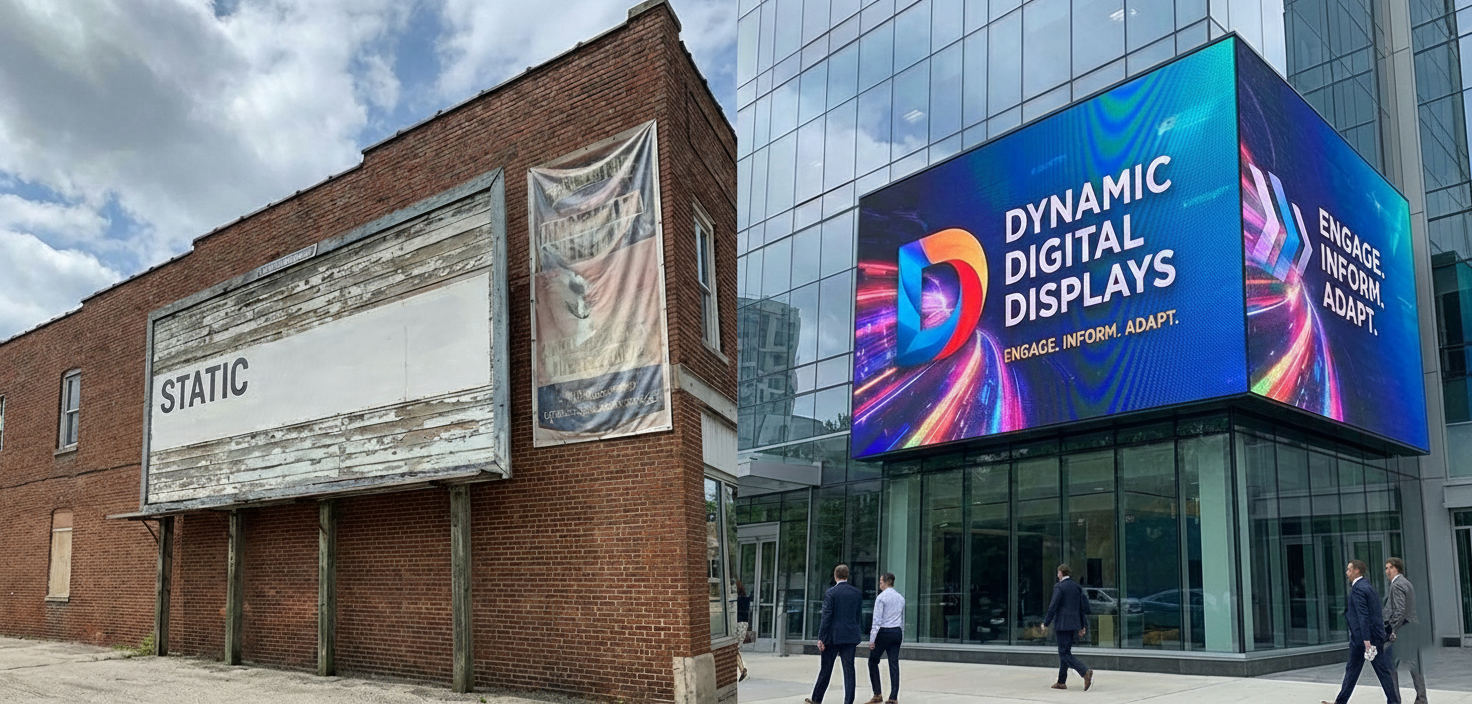
Traditional formats still offer visibility, but they don’t adapt easily. Once a message is up, it stays the same unless it is replaced. This makes it difficult to adjust campaigns based on timing, performance, or changing requirements.
A digital display screen for advertising solves this by giving control over what is shown and when. It allows businesses to update content without changing the setup, making campaigns easier to manage and more responsive to real conditions.
What is a Digital Display Screen for Advertising?
A digital display screen for advertising is an LED or LCD-based system designed to deliver visual content such as videos, animations, and static creatives in a controlled and repeatable format. These systems are built with display panels, media players, and content management software that work together to run scheduled advertising content.
Unlike printed hoardings, the content is not fixed. It is managed through a centralized system (CMS), which allows advertisers to update creatives remotely, schedule playback based on time or location, and control multiple screens from a single interface.
A digital advertising screen functions as a networked advertising unit. It can run multiple creatives in a loop, adjust content dynamically, and maintain consistency across different sites. This setup improves content control, reduces downtime between campaigns, and allows more efficient use of a single display surface.
Where Can You Install Digital Displays?
The effectiveness of a digital display screen depends largely on the viewing environment and audience behavior.
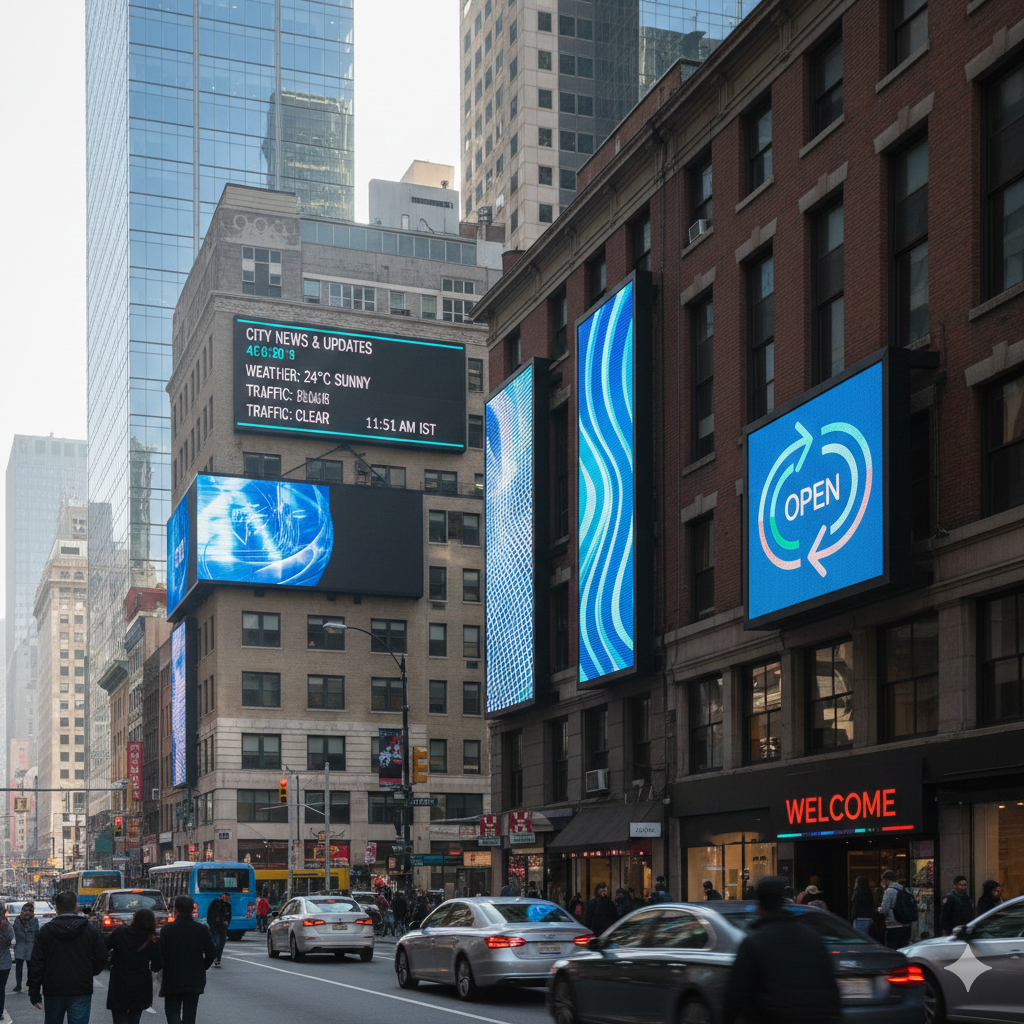
Roadside Advertising
In high-traffic and fast-moving areas, attention spans are limited. Content must be brief, visually strong, and easy to process within a few seconds. High brightness and clear contrast improve visibility in outdoor conditions.
Retail and Showrooms
Within retail spaces, digital screens play a functional role in influencing purchase decisions. They are used to highlight offers, demonstrate products, and reinforce brand messaging at the point of sale.
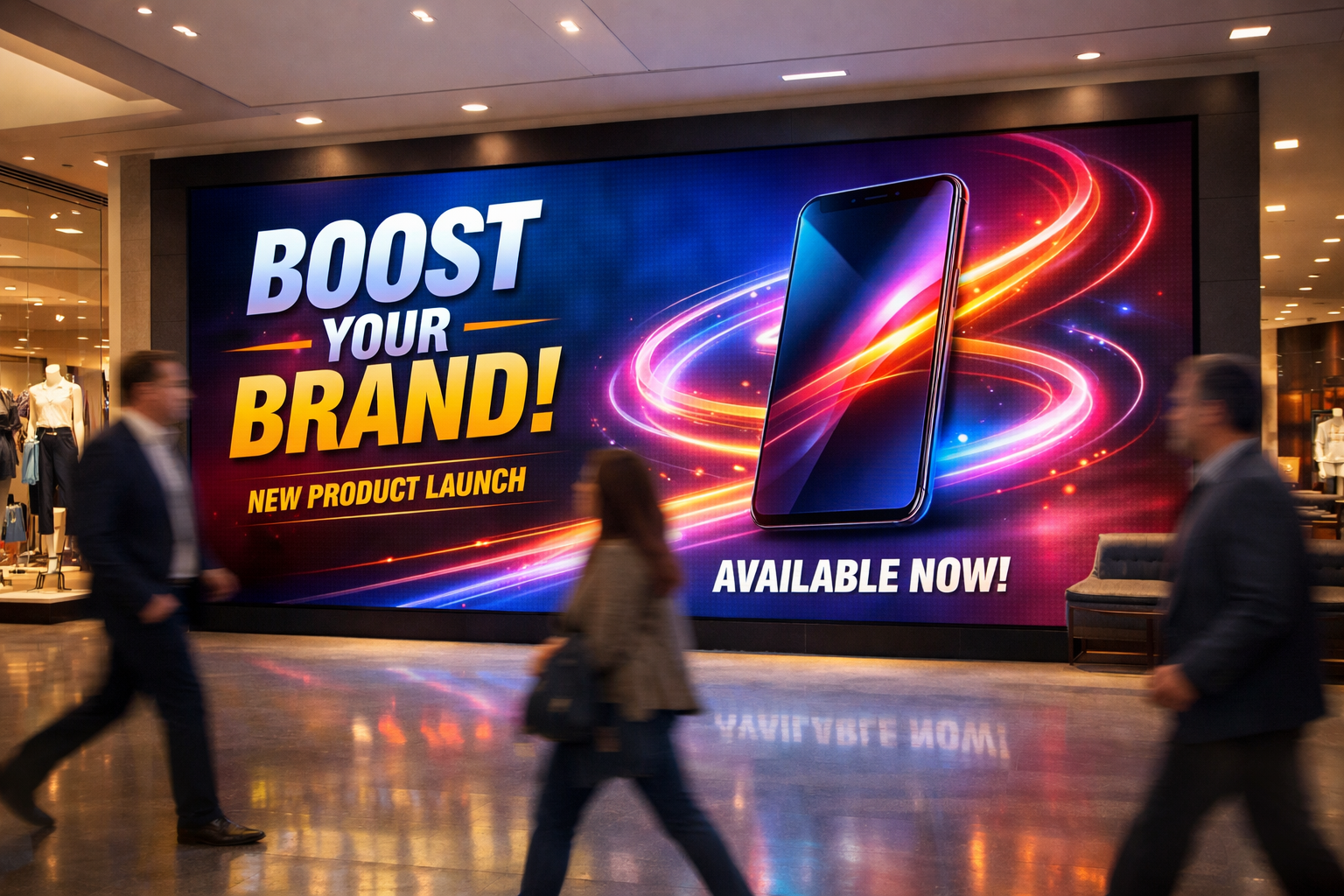
Malls and Commercial Areas
In these environments, audiences are more relaxed and engaged. Content should remain simple, clear, and repeated at intervals to ensure consistent visibility without overwhelming the viewer.
Things to Remember After Installing LED Screen For Advertising
Installing a screen is only the first step. Actual performance depends on how the content is planned and how the screen is set up within the space.
Content Should Match Viewing Time
The duration for which a viewer sees the screen varies by location. Roadside displays typically allow only a few seconds, so content must be short and easy to read. Indoor environments offer slightly longer engagement, which allows for more detailed visuals.
Frequency of Repeated Content Circulation
Repeated exposure improves recall. Short creatives shown at regular intervals are more effective than longer content played less frequently. Consistency in messaging helps reinforce brand visibility.
Placement and Brightness
Visibility is directly influenced by placement and screen brightness. Outdoor screens require higher brightness levels to remain visible in daylight. Indoor screens rely more on correct positioning, viewing angle, and distance from the audience.
Common Mistakes to Avoid
Many businesses install digital screens but continue using them like static hoardings. This reduces their effectiveness.
Common issues include:
Using the same fixed creative for long periods
Running long videos in fast-moving environments
Not updating content regularly
Ignoring placement and visibility factors
Final Thoughts
A digital display screen for advertising offers a more practical way to manage campaigns. It allows content to be updated, adjusted, and aligned with real conditions without changing the setup.
All you need to do is use this flexibility properly by matching content with location, updating creatives when needed, and ensuring proper placement.
Before implementation, it is advisable to consult with professionals who understand both the technical setup and campaign requirements. This will undoubtedly help you get measurable results in a short span of time.

Write a comment ...